Pikmin Bloom: Walking Game
- 4.7
- Rating
- 5.00M
- Installs
- Free
- Price

 Analysis by App-foxy
Pikmin Bloom turns ordinary walking into a gentle adventure by making your route the main part of play. Rather than asking me to sit still and manage a complicated battle system, it gives my daily movement a purpose: I walk, discover, grow my small Pikmin companions, and gradually make familiar streets feel different. That simple connection between real steps and game progress is the reason I kept opening it.
Created by Niantic, Inc., this free adventure game is aimed at Everyone and works on devices running Android 9 or later. It has built a sizeable audience, with a 4.7 average from around 191 thousand ratings and more than 5 million installs. Those figures make sense once the central idea clicks: this is less about winning a traditional match and more about giving walks a playful layer.
Why turning a walk into the main game works
The most important capability here is its use of real-world movement as the foundation of progression. In many mobile games, walking is something I do between sessions, while the actual game happens on a screen. Here, the relationship is reversed. My route, pace, and willingness to explore provide the raw material for what happens in the app.
You May Also Like

 Blood Strike: 2.5 Anniversary
Blood Strike’s Loadouts Turn Every Drop Into a Tactical Gamble
A close look at Blood Strike’s custom loadouts: how fast access to signature weapons reshapes its battle royale rhythm, rewards preparation, and narrows the gap between fights.

 Pandora - Music & Podcasts
Pandora’s Music Is Easy to Start, but Harder to Recover
Pandora’s strength is its low-effort path from a seed to a station. Its weak spot is how much confidence it asks you to place in connection, setup, and quiet recovery.

 8 Ball Pool
 Is Built on Rivalries, Rematches, and Routine
A close look at the rivalries, rematches, shared routines, and unanswered safety questions that turn a quick pool match into a persistent mobile community.

 Samsung Music
’s Quiet Strength Is Playing What You Already Own
Its reach comes less from spectacle than from dependable access to a personal library. That simplicity is both the app’s strongest retention engine and its ceiling.

 AccuWeather: Weather Radar
AccuWeather Review: A Quick, Clear Forecast for Everyday Decisions
For everyday plans, the best forecast is the one you can understand quickly. AccuWeather makes rain timing, radar, and local conditions easy to act on, with a few trade-offs.

 Hill Climb Racing
Why Hill Climb Racing Still Turns Crashes Into One More Run
A tiny car, a bumpy hill and one more upgrade: Hill Climb Racing keeps resurfacing because its simple chaos makes every near-miss feel personal.
More From Our News Desk
View All News


That changes the emotional pressure of play. I do not feel pushed to clear a level before bedtime or react instantly to an opponent. A short trip to a shop can still contribute something, while a longer walk gives me more time to notice what is happening around me. The game rewards consistency more than intense concentration, which makes it unusually easy to fit around normal life.
The Pikmin themselves are what make the movement feel personal. I am not simply watching a step counter fill. I am building a little group that accompanies my progress, and that gives otherwise forgettable routes a sense of continuity. A familiar park or commute becomes part of an ongoing adventure rather than just background scenery.
The real strength is not the walking requirement by itself; it is the way walking becomes meaningful without demanding my full attention. I can check in during a break, make a decision, and put the phone away. That is a much better fit for a game intended to encourage movement than a design that requires constant screen time.
What the experience feels like during a normal day
I found the best approach was to treat Pikmin Bloom as a companion to plans I already had, not as a reason to force an exhausting route. On a workday, I could start a walk, let the game accompany me, and review the results later. On a weekend, I could take a less direct path and pay more attention to the changing surroundings.
This distinction matters because the game is not trying to replace a deep role-playing adventure or a competitive multiplayer title. Its satisfaction comes from accumulation. Small actions become more noticeable when repeated over time, and the app is at its most convincing when I accept that a modest session is still worthwhile.
The store summary, “Walk on. Game on.”, captures the basic relationship, but it does not explain the practical benefit: I spend less time looking for a spare hour to play. The game can occupy the edges of an existing routine, whether that means walking to a café, taking a longer route home, or exploring a neighborhood on a free afternoon.
How movement becomes useful in practice
The first thing I would tell a new player is not to judge the experience after one short session. The appeal develops when the app has enough of my everyday movement to create a sense of history. A single walk can be pleasant, but repeated walks are where the world starts to feel connected to my habits.
I also learned that the game works better when I decide in advance how much attention I want to give it. If I keep checking the screen every few minutes, the walk becomes less enjoyable and I become more aware of the phone than the surroundings. If I set things up, walk safely, and return to the app at natural pauses, the balance feels much better.
That makes it especially suitable for people who want a light incentive to move but dislike conventional fitness applications. A fitness tracker may present charts, targets, and measurements, while this game gives movement a warmer, more playful context. The trade-off is that it is less useful if my main goal is detailed training analysis. For that, a dedicated health or running app is the stronger choice.
Compared with location-based games that focus heavily on collecting, fighting, or defending places, Pikmin Bloom feels calmer. I am not approaching a walk with the same competitive mindset. That can be refreshing after a long day, although players who want strategic pressure, direct rivalry, or constant surprises may find the pace too soft.
A practical routine that avoids wasted effort
My most reliable routine is to open the game before leaving, make sure I understand what I am setting out to do, and then keep the phone away while walking. I check progress at a safe stopping point instead of trying to manage every action in motion. This preserves the main benefit: the game supports the walk instead of interrupting it.
For a commute, I would use it as a background activity rather than trying to optimize every part of the journey. A route with a little extra walking can make the experience more satisfying, but I would not take unsafe crossings, stare at the screen near traffic, or change plans solely to chase a digital objective. The game is most enjoyable when it adds a small reason to explore, not when it controls the entire outing.
Another useful habit is to vary the places I walk. Repeating the same short loop can still be productive, but a new street, public garden, or shopping area gives the adventure more texture. I noticed that the app feels less like a checklist when I let the real environment lead and let the game respond to it.
Players should also think about battery and mobile-data habits in practical terms. Any game connected to outdoor movement can be inconvenient if I begin a long walk with a nearly empty phone. I would charge beforehand and avoid relying on the app during situations where losing access to the device would be a problem. That is not a reason to avoid it, but it is part of using it sensibly.
The best everyday scenario for Pikmin Bloom
The strongest use case is someone who already wants to walk more but needs a soft nudge rather than a strict program. Imagine a person who normally takes public transport, spends much of the day indoors, and often abandons fitness plans because they feel too demanding. This game can turn the walk to the station, the extra block after lunch, or a relaxed evening stroll into something with continuity.
In that situation, I would not treat the app as a coach issuing orders. I would use it as a reason to choose the stairs, leave a little earlier, or explore a quieter route home. The game gives those choices a playful consequence, while the physical benefit comes from the movement itself.
It also suits families and friends who want an outdoor activity without making the outing feel like exercise. Different people can walk at their own pace and still share the idea of discovering something along the way. The Everyone rating makes it approachable as a general-audience game, although younger players still need the same supervision and road-safety awareness appropriate for any phone activity outdoors.
Travel is another good setting. When I visit a new area, I naturally walk more, and a game built around movement can make those miles feel connected. I would not let it dictate sightseeing, but it can add a reason to take a side street or continue a little farther after reaching the obvious destination.
Where it is less convincing
Pikmin Bloom is not the right match for someone who wants a fast, skill-heavy game. There is no reason to expect the same immediate tension as an action adventure, the same detailed planning as a strategy game, or the same measurable training feedback as a specialist fitness tool. Its rewards are gradual, and the game asks for patience.
It may also frustrate players who cannot walk regularly or who prefer to play entirely indoors. The central concept loses much of its value when movement is difficult, inconsistent, or simply not part of the player’s routine. In that case, a conventional adventure game with direct controls will probably offer more entertainment per minute.
People who dislike location-aware mobile experiences may also hesitate. Even without turning the game into a constant distraction, its identity is tied to going outside and connecting play with place. If that relationship feels like a burden rather than an invitation, the charming side of the design will not compensate.
The free entry point is helpful, but optional purchases range from $0.99 to $219.99 per item. I would approach those purchases carefully and decide what kind of player I am before spending. The game’s basic appeal comes from walking and gradual progress, so I would not assume that paying more automatically makes the experience more satisfying. A player who enjoys the slow rhythm may be perfectly happy treating the free version as the main experience.
Small decisions that make the slow pace better
One non-obvious advantage is that I can use the game to change my relationship with routine rather than simply chase a daily target. Instead of asking whether a walk was long enough, I ask whether it was more enjoyable, more varied, or easier to repeat tomorrow. That shift prevents the app from becoming another source of guilt.
A second insight is that the app works best when I separate “playing” from “monitoring.” I can make choices before a walk, let the activity unfold, and review what happened afterward. This is more comfortable and safer than treating every street corner as a prompt demanding an immediate response.
A third trade-off is that exploration has a different value here than optimization. A player who tries to calculate the perfect route may gain efficiency but lose the relaxed feeling that makes the game distinctive. I prefer choosing a route with one interesting detour, because the real-world discovery is part of the reward even when the digital result is not maximized.
I would also set expectations around social play. This is a game I can enjoy alone, and that is important for people who do not want to coordinate schedules. Friends can make walking more motivating, but I would not recommend it to someone whose only reason to play is intense competition. Its design is better at encouraging shared outings and gentle accountability than at creating a high-pressure contest.
Device fit, cost, and long-term commitment
The current version is 138.0, and the game is free to start. Those details make trying it straightforward for compatible users, but the real question is whether the walking loop fits the person holding the phone. I would not install it expecting a traditional campaign with a clear finish line. I would install it expecting a continuing habit that becomes more enjoyable when used regularly.
The audience size and strong average rating suggest that the central idea resonates with many players, but popularity is not a substitute for personal fit. Someone who enjoys calm collection and outdoor routines may understand the appeal immediately. Someone who wants rapid progression, dramatic story beats, or precise control may reasonably prefer another adventure game.
There is also a psychological trade-off. Turning movement into a game can make a walk easier to start, but it can make the walk feel less spontaneous if I become too focused on progress. I recommend keeping the real-world purpose first: walk for fresh air, errands, company, or exploration, then let the game add a layer on top.
Who gets the most from this walking adventure
I would recommend Pikmin Bloom to people who want a gentle reason to leave the house, enjoy collecting companions, and are comfortable with progress that builds gradually. It is especially appealing if ordinary routes feel repetitive and a small amount of game structure would make them more inviting.
I would be more cautious recommending it to dedicated runners, competitive gamers, or anyone looking for a complete substitute for a fitness tracker. Those players may find its feedback too soft or its pace too patient. A running application is better for training plans, and a conventional action game is better for immediate excitement.
For me, the best way to understand this adventure is to stop asking whether it contains enough action and ask whether it makes walking easier to repeat. On that narrower question, it succeeds more often than I expected. It gives a familiar trip a sense of progression without demanding that I surrender the trip to the screen.
Pikmin Bloom is worth trying if you want your phone to encourage movement rather than keep you seated. Its free starting point, Everyone rating, and relaxed design make it approachable, while the optional purchases mean I can decide for myself how much I want to invest. I would choose it for companionship on everyday walks, not for competition or technical fitness analysis. Used that way, it is a pleasant adventure that makes small journeys feel a little more alive.
FAQs for Pikmin Bloom: Walking Game
01What is Pikmin Bloom and how does it work?
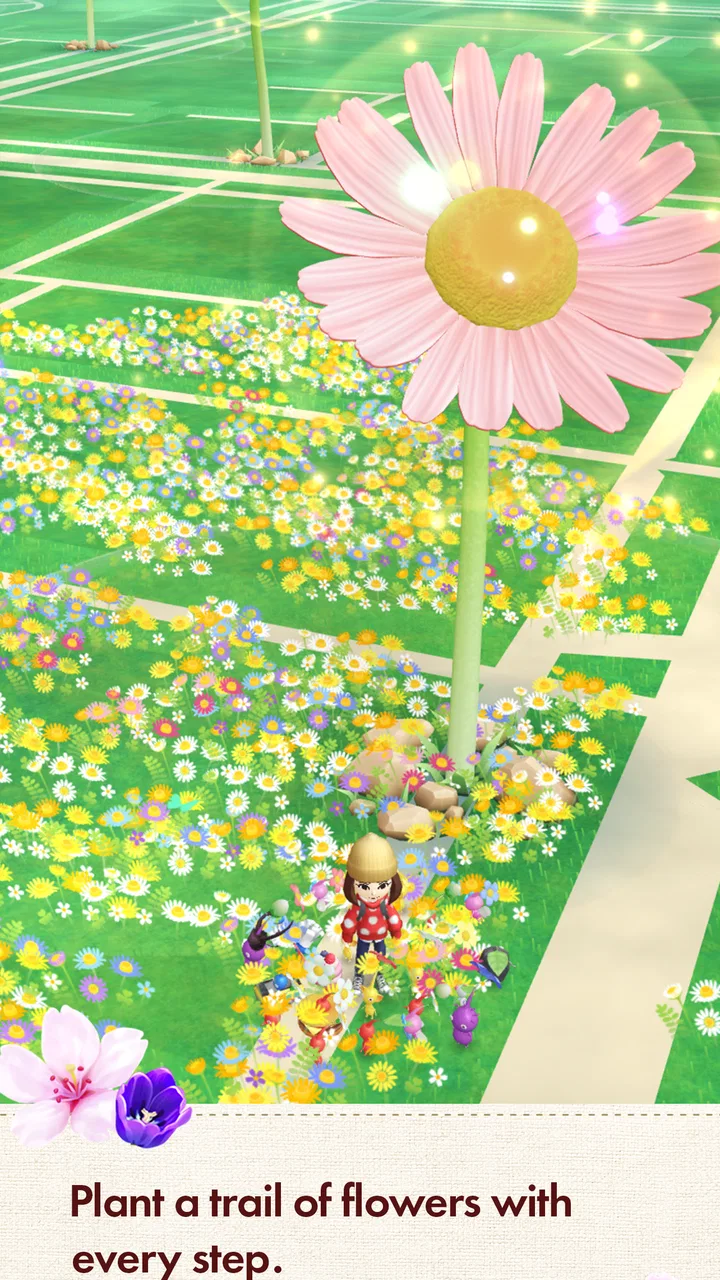
Pikmin Bloom is an augmented reality mobile game developed by Niantic, where players explore the real world alongside Pikmin, plant-like creatures that grow from seeds. As you walk, Pikmin follow you, collect items, and plant flowers. The game encourages outdoor activity and interaction with the world around you, turning your daily walks into playful adventures.
02Can I play Pikmin Bloom without an internet connection?
Pikmin Bloom requires an internet connection to function properly. The game uses GPS to track your movements and facilitate interactions with the augmented reality features. While some offline functionality may be available, such as viewing previously collected items, full gameplay features are accessible only with an active internet connection.
03Is Pikmin Bloom free to play?
Yes, Pikmin Bloom is free to download and play. However, the game does offer optional in-app purchases, which can enhance the gaming experience. These purchases may include items that speed up growth or enhance the abilities of your Pikmin. While these are not necessary to enjoy the game, they can provide additional convenience and fun.
04What devices are compatible with Pikmin Bloom?
Pikmin Bloom is compatible with most Android and iOS devices. Specifically, it requires Android 6.0 and above or iOS 12.0 and above. It's important to ensure your device meets these requirements to enjoy a seamless gaming experience. Additionally, devices should have GPS functionality and internet connectivity for optimal gameplay.
05How does Pikmin Bloom promote physical activity?
Pikmin Bloom encourages physical activity by transforming your daily walks into engaging gameplay. As you walk, you plant flowers and gather items with your Pikmin companions. The game tracks your step count, providing a fun incentive to move more. This fusion of fitness and gaming motivates players to explore their surroundings and stay active.
Pros
- Engaging real-world exploration mechanics.
- Stunning
- vibrant graphics enhance gameplay.
- Encourages physical activity and outdoor exploration.
- Simple
- intuitive controls suitable for all ages.
- Regular updates add fresh content and events.
Cons
- Requires constant internet connection.
- Limited offline functionality.
- Can drain battery quickly.
- In-app purchases can be pricey.
- Gameplay may become repetitive over time.

Pikmin Bloom: Walking Game
Gallery